





Salesforce Is Retiring 24 Certifications: What CRM and SFMC Professionals Need to Know
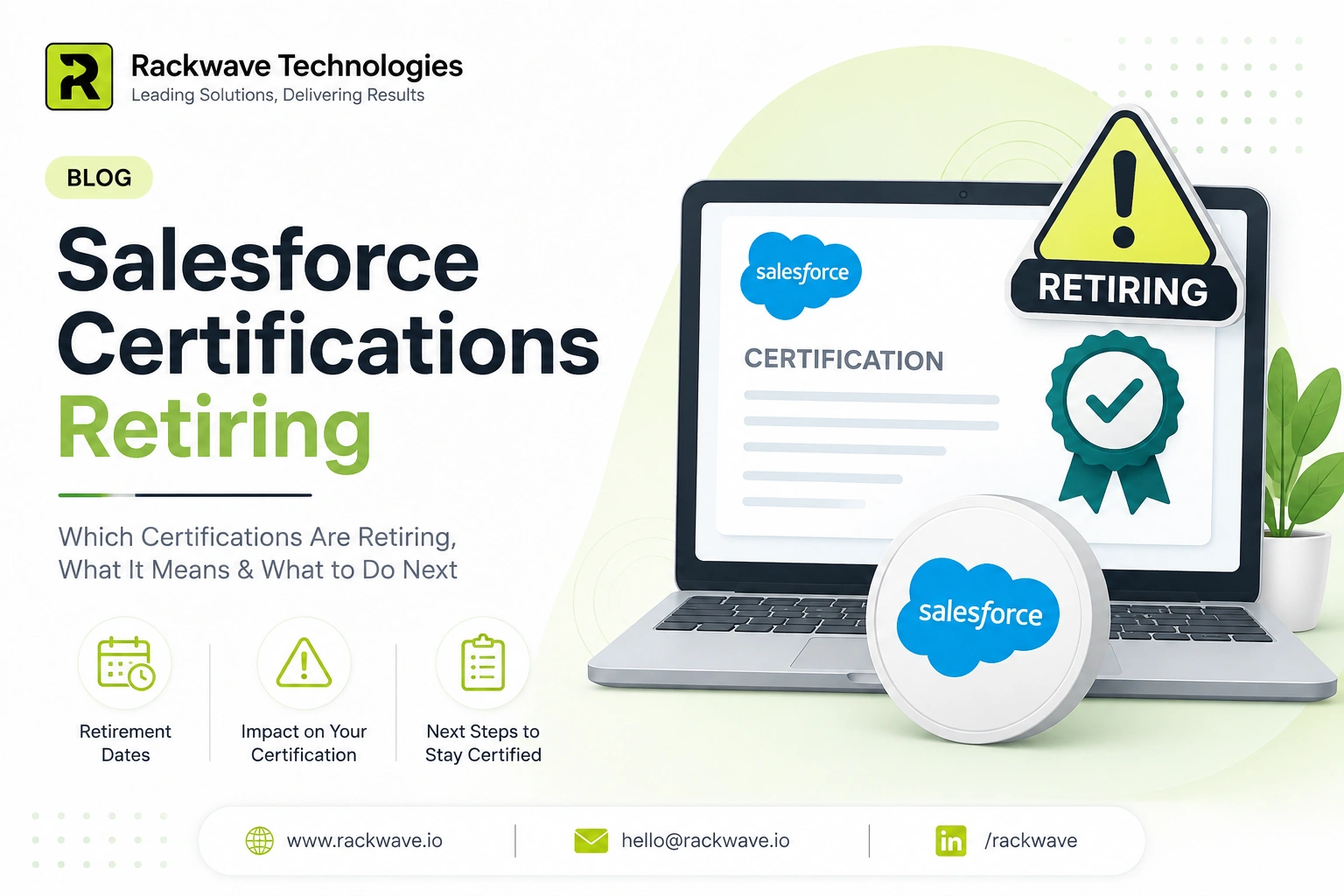
Salesforce is retiring 24 certifications by February 2027. Full list, key deadlines, path forward options, and
Salesforce Marketing Cloud is one of the most powerful — and most underused — marketing platforms on the market. Most implementations use Email Studio and basic journeys, leaving Automation Studio, Einstein, CDP, and Intelligence Builder untouched. We change that, delivering the full SFMC capability your licence cost should be producing.
SFMC licences are expensive. Most organisations use 30-40% of the platform they are paying for. These are the gaps we find most frequently — and the licence cost they represent.
Journeys built as linear drip sequences with no decision splits, no re-entry logic, and no event-triggered branching. Every customer follows the same path regardless of what they do — making "personalised journeys" indistinguishable from scheduled broadcast campaigns.
Automation Studio used only for triggered sends. Data imports run manually. SQL queries not used to create derived data extensions. Scheduled automations absent for list hygiene, suppression refresh, and data sync from CRM.
Personalisation limited to %%FirstName%% substitution. No AMPscript conditional logic, no dynamic content blocks, no SSJS functions for complex lookups. Content blocks static. No use of data extension lookups for personalised content.
Einstein Send Time Optimisation not configured. Einstein Content Tagging not used for content management. Einstein Engagement Scoring not feeding suppression or frequency management logic. AI features paid for, disabled or misconfigured.
Campaign performance measured in built-in SFMC reports that show send volume, open rate, and click rate — but no revenue attribution, no journey funnel analytics, no A/B test significance testing, and no cross-channel performance view.
Data extensions created ad hoc. No master subscriber data model. Contact builder relationships unmapped. CRM sync unreliable or partial. Suppression lists manually maintained. Data quality issues causing personalisation errors and compliance risks.
We work across every SFMC Studio and Builder — configuring, integrating, and optimising each one to produce measurable business outcomes rather than platform activity metrics.
We audit, rebuild, and optimise Email Studio implementations — from template architecture and dynamic content configuration through sender authentication (SPF, DKIM, DMARC), dedicated IP setup, IP warming, and the deliverability programme that maintains inbox placement as you scale. We also implement AMPscript and SSJS to make every email genuinely personalised rather than name-substituted.
We design and build customer journeys that actually branch on behaviour — welcome journeys with feature adoption gates, abandoned cart journeys with multi-step recovery, re-engagement journeys with diminishing frequency, post-purchase cross-sell journeys, and the loyalty tier journeys that reward your best customers. Every journey is built with proper decision splits, wait activities, and engagement evaluation.
We build the Automation Studio programmes that run your marketing data operations — scheduled CRM syncs, data extension imports, SQL query activities that derive segments and attributes, list hygiene automations, suppression refresh, and the scheduled journey re-evaluation that keeps your audience data current without manual intervention.
We configure and activate SFMC's Einstein AI features — Send Time Optimisation (STO) to deliver each email at each recipient's peak engagement time, Einstein Engagement Scoring to suppress disengaged contacts before they hurt your deliverability, Einstein Content Selection to dynamically serve the most relevant content block, and Einstein Copy Insights for subject line optimisation.
We design and implement the data architecture that makes SFMC segmentation, personalisation, and automation possible at scale — master subscriber data model, data extension schema, Contact Builder relationship mapping, Salesforce CRM bidirectional integration, and the data quality controls that prevent the personalisation errors and compliance failures that follow from bad data.
We configure SFMC Intelligence Builder (formerly Datorama) to produce revenue-attributed marketing reporting — connecting journey data, email engagement, web analytics, and transaction data into a unified dashboard that shows which programmes drive revenue rather than which programmes drive open rates. We also build the A/B test measurement framework that produces statistically valid results.
Salesforce Marketing Cloud is a suite of products, not a single platform. Understanding which product delivers which capability — and how they integrate — determines whether your SFMC investment delivers ROI.
The core SFMC product — Email Studio, Journey Builder, Mobile Studio, Social Studio, and Advertising Studio. The engine of multi-channel customer lifecycle management. We implement, migrate, and optimise MC Engagement programmes, building the data model and journey architecture that makes every customer interaction contextually relevant.
Marketing Cloud Intelligence (formerly Datorama) is SFMC's analytics layer — connecting marketing channel data into unified reporting with revenue attribution. We implement Intelligence to replace the fragmented reporting that makes SFMC performance invisible — building dashboards that show which programmes drive revenue, not just which ones drive clicks.
Salesforce Data Cloud (formerly Marketing Cloud CDP) creates a unified customer profile from every data source — CRM, web, email engagement, transactional, and third-party — enabling the real-time segmentation and personalisation that Email Studio alone cannot achieve. We implement Data Cloud as the intelligence layer that makes SFMC personalisation genuinely individualised.
Marketing Cloud Account Engagement (Pardot) is SFMC's B2B marketing automation product — lead scoring, nurture programmes, landing pages, and the Salesforce CRM integration that connects marketing activity to sales pipeline. We implement and optimise Pardot for B2B marketing teams who need to demonstrate pipeline influence and closed revenue from their programmes.
A properly designed SFMC journey starts with the business outcome, not the platform. Our four-step process ensures every Journey Builder programme we build delivers measurable results before it goes live.
We begin with the business outcome — not the platform. What behaviour change does this journey need to produce? What is the goal event? How will success be measured? This determines journey structure, entry criteria, and exit conditions before any build begins.
We map the data extensions, relationship structures, and entry source queries that the journey needs to run on. Poor data design is the most common cause of Journey Builder failures — we fix it before build, not after go-live.
We build the journey in a sandbox Business Unit, test every path with real subscriber profiles, validate every AMPscript block against missing-data scenarios, and run suppression lists against the entry population before any message goes live.
We launch with monitoring in place — deliverability alerts, engagement drop triggers, and weekly performance review. After each journey reaches statistical significance, we identify the highest-impact optimisation and implement it — treating every Journey Builder programme as a continuously improving asset.
You have three options for SFMC expertise: in-house, a generalist digital agency, or a specialist SFMC consultancy. Here is an honest comparison.
Feedback from Marketing Directors, CRM Managers, and Digital VPs who trusted us to transform their Salesforce Marketing Cloud programmes.
Our SFMC deliverability was at 78% inbox placement — one in five emails never reached the inbox. Rackwave diagnosed the IP reputation issue, ran a 6-week re-warming programme, implemented DMARC, and rebuilt our suppression logic. Deliverability went to 97.3% in 3 months. The revenue impact of that improvement — from campaigns that were previously unseen — was immediate.
We were paying for Einstein for 2 years without using it. Rackwave configured Einstein STO and Engagement Scoring in 3 weeks. Email clicks increased 28% purely from sending at the right time per recipient. Engagement scoring reduced our active file size by 22% — which also improved deliverability and reduced spam complaints.
We had invested £680,000 in SFMC over three years and had no clear picture of what it was generating in revenue. We had Email Studio configured and one journey that had been live since 2021 without modification. Rackwave ran a comprehensive audit, rebuilt our data architecture, redesigned our journey library with eight new lifecycle journeys, configured Intelligence Builder for revenue attribution, and implemented Einstein STO. In the first 12 months after the rebuild, SFMC-attributed revenue was £2.4 million — up from £380,000 in the previous year. The Intelligence Builder reporting finally let us show the board exactly what the platform was worth. We now think of SFMC as our highest-ROI marketing investment, not a sunk cost.
“Rackwave Technologies has significantly improved our marketing performance while providing reliable cloud services. We’ve been using their solutions for a while now, and the experience has been seamless, scalable, and results-driven.”
David Larry
Founder & CEOCommon questions about Salesforce Marketing Cloud consulting with Rackwave Technologies.
Marketing Cloud Engagement (the core SFMC product, formerly known as ExactTarget) is designed for B2C marketing at volume — email, SMS, push, journey orchestration, and personalisation across millions of contacts. It excels at high-frequency, data-rich customer lifecycle marketing. Marketing Cloud Account Engagement (Pardot) is designed for B2B marketing — managing a smaller number of prospects through longer, more complex buying cycles with tighter Salesforce CRM integration for pipeline attribution. The two products have different pricing, different data models, and different use cases. We help organisations determine which is right for their specific marketing model, and we implement both.
AMPscript is Salesforce Marketing Cloud's proprietary scripting language for dynamic content — it runs on the SFMC server when an email is rendered, allowing you to look up data from data extensions, apply conditional logic (show this block if the subscriber has X attribute), format variables, and produce truly individual content rather than bulk content with variable substitution. Most organisations need AMPscript to go beyond first-name personalisation. Without it, your emails cannot adapt their content structure based on subscriber data — every recipient sees the same email layout with different variable values. We write production-grade AMPscript that handles missing-data edge cases, making your personalisation reliable rather than a source of broken sends.
A focused implementation — Email Studio setup with deliverability foundation, one or two Journey Builder programmes, and basic reporting — typically takes 8-12 weeks. A full SFMC programme covering Journey Builder, Automation Studio data operations, AMPscript personalisation, Einstein AI configuration, and Intelligence Builder analytics takes 4-6 months. Migrations from other platforms (Mailchimp, HubSpot, Eloqua) add complexity depending on campaign library size and data migration requirements. We scope the timeline against your specific deliverables rather than selling a template implementation package.
Yes — an SFMC audit is often the fastest way to find revenue improvement opportunities. We audit six areas: Email Studio configuration (template quality, authentication, deliverability), Journey Builder (journey architecture, entry criteria, decision splits, goal events), Automation Studio (data operations, SQL queries, scheduling), data architecture (data extension schema, Contact Builder, CRM sync), personalisation (AMPscript usage, dynamic content blocks), and analytics (conversion tracking, Intelligence Builder, A/B test methodology). The audit produces a prioritised list of improvements with estimated impact and implementation cost. Most audit clients find 3-5 high-impact improvements that collectively pay for the audit in the first campaign after implementation.
Yes — Salesforce CRM to SFMC integration (via Marketing Cloud Connect) is standard in most of our SFMC implementations. MC Connect synchronises Lead, Contact, Campaign, and CampaignMember objects between Salesforce CRM and Marketing Cloud, enabling Salesforce journey entry from CRM record changes, campaign attribution back to Salesforce Campaigns, and suppression based on CRM field values. The integration requires careful configuration — particularly around the Contact Key and subscriber key alignment — to avoid the duplicate subscriber records and broken sync that are the most common MC Connect problems we are called in to fix.
Our SFMC team holds Salesforce Marketing Cloud Email Specialist, Marketing Cloud Consultant, Marketing Cloud Developer, and Marketing Cloud Administrator certifications. We maintain current certification status — not historical passes — because SFMC releases significant new features multiple times per year and certification requirements track those changes. We also hold Salesforce Marketing Cloud Intelligence (Datorama) accreditation for clients who need Intelligence Builder implementation.